California’s Inyo County & Grapevine Mountains: A Historical & Geological Overview
Inyo County’s Grapevine Mountains reveal a complex geological past, documented in PDF maps and California Division of Mines reports, detailing structural features and fossil localities․
The Grapevine Mountains, situated within Inyo County, California, and extending into Nevada, represent a crucial geological window into the region’s dynamic history․ Accessible PDF geologic maps, like those detailing the Central Grapevine Mountains, showcase the intricate interplay of tectonic forces and sedimentary deposition over millions of years․ These mountains form the eastern wall of northern Death Valley, bounded by Boundary Canyon to the south and Grapevine Canyon to the north, presenting rugged terrain with exceptional geological exposures․
Research, including studies by C․ Stevens and P․ Stone, focuses on the chronological and structural constraints revealed near Tinemaha Reservoir․ The area’s geological complexity is further illuminated by California Division of Mines and Geology Special Report 106, providing a foundational understanding of the region’s geologic features․ The mountains’ barren landscape facilitates detailed observation, making them a prime location for paleontological discoveries, such as the Titus Canyon Fauna․
Geographical Location & Boundaries
The Grapevine Mountains are strategically positioned within the broader geological context of the Death Valley region, spanning parts of Inyo County, California, and extending into Esmeralda and Nye Counties, Nevada․ Detailed PDF geologic maps precisely delineate their location and boundaries․ Specifically, they are limited on the south by Boundary Canyon and on the north by Grapevine Canyon, effectively forming the eastern wall of northern Death Valley․
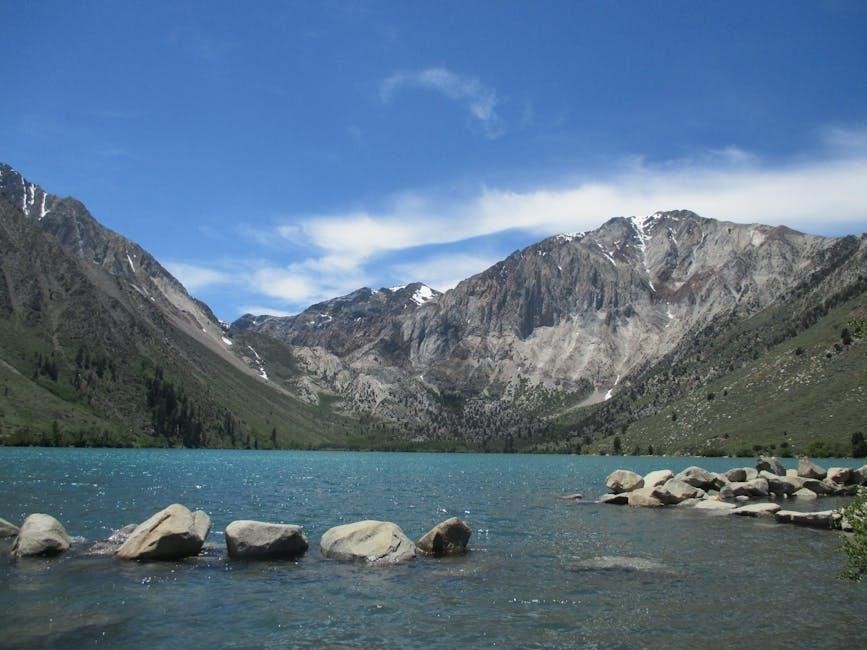
These geographical constraints are crucial for understanding the mountain range’s geological history and structural features․ The rugged terrain and high relief contribute to excellent rock exposures, facilitating geological mapping and research․ Accessing detailed information through available PDF resources allows for a comprehensive understanding of the area’s spatial relationships and geological formations, as documented in reports and studies focused on the region’s complex geology․
Inyo County Context: A Brief History
Inyo County, California, boasts a rich geological history intricately linked to the formation and evolution of the Grapevine Mountains․ Historical geological surveys, documented in reports like California Division of Mines’ Special Report 106, provide foundational insights into the region’s past․ These early investigations, alongside more recent research detailed in accessible PDF formats, reveal a multistage geological history predating the Basin and Range extension․
The area’s geological complexity has attracted ongoing study, with researchers like C․ Stevens and P․ Stone contributing to our understanding of the chronological and structural constraints revealed near Tinemaha Reservoir․ The availability of detailed geologic maps in PDF form allows for continued analysis of the region’s past, connecting Permian and Triassic relationships to more recent formations․

Geological History of the Grapevine Mountains
Grapevine Mountains’ history, detailed in PDF geologic maps, spans Permian, Triassic, Oligocene, and Miocene epochs, revealing complex sedimentary records and structural formations․
Permian & Triassic Geological Relationships
Permian and Triassic geological relationships, exposed near Tinemaha Reservoir, provide crucial chronological and structural constraints for understanding the region’s complex history․ Research, as documented in available PDF geologic maps of the Central Grapevine Mountains in Inyo County, California, and extending into Nevada, highlights these connections․ These formations reveal a pre-Basin and Range history, evidenced by exposed strata and faulting․
C․ Stevens and P․ Stone’s work, accessible through Semantic Scholar, emphasizes the importance of these exposures in deciphering the area’s tectonic evolution․ The interplay between Permian and Triassic deposits offers insights into ancient depositional environments and subsequent deformation․ Detailed mapping efforts, often presented in PDF format by the California Division of Mines and Geology, showcase the intricate folding and thrust faulting that shaped the landscape․ Understanding these early relationships is fundamental to interpreting the later geological events that molded the Grapevine Mountains․
Oligocene & Miocene Sedimentary Records
Latest Oligocene and early Miocene sedimentary rocks at the southern end of the Funeral Mountains record a multistage, pre-Basin and Range history, as detailed in geological surveys and PDF reports․ These records, found within Inyo County, California, and adjacent areas, provide valuable data on ancient depositional systems and paleoenvironments․ Analysis of these formations, often presented in detailed geologic maps, reveals insights into the region’s evolving landscape․
The sedimentary sequences document periods of fluvial and lacustrine deposition, reflecting changes in climate and tectonic activity․ Researchers utilizing resources like Semantic Scholar can access studies examining the stratigraphic relationships within these units․ These PDF-accessible resources highlight the importance of understanding the Oligocene and Miocene records for reconstructing the geological evolution of the Grapevine Mountains and surrounding areas, offering a crucial piece of the puzzle․
Titus Canyon Formation & the Eocene Epoch
The Titus Canyon Formation, central to understanding the Eocene Epoch in the Grapevine Mountains of Inyo County, California, is renowned for its rich paleontological record․ PDF documents detailing the Titus Canyon Fauna reveal a “Early Late Duchesnean” age, placing it firmly within the middle Eocene period․ Stratigraphic columnar sections, available in research publications, showcase fossil locality levels and dated tuffaceous units, crucial for biostratigraphic correlation․
These formations, extensively mapped and analyzed, provide insights into the paleoecology and evolutionary history of the region․ Accessing detailed geologic maps in PDF format allows researchers to visualize the spatial distribution of these fossil-bearing layers․ Studies, often found via Semantic Scholar, emphasize the importance of the Titus Canyon Formation as a key locality for understanding Eocene mammalian evolution in western North America․
Stratigraphic Columnar Sections: Grapevine & Funeral Mountains
Detailed stratigraphic columnar sections, readily available in PDF reports and research papers, are fundamental to deciphering the geological history of both the Grapevine and Funeral Mountains in Inyo County, California․ These sections meticulously illustrate the vertical succession of rock layers, showcasing the relationships between different formations, including the crucial Titus Canyon Formation․ They pinpoint levels of significant fossil localities and integrate data from dated tuffaceous units․
Researchers, like Stock and Bode (referenced in available PDFs), have utilized these sections to reconstruct the depositional environments and timing of geological events․ Accessing these visual representations, often found through Semantic Scholar, is vital for understanding the complex interplay between sedimentation, volcanism, and tectonic activity that shaped this region․ These sections are essential for correlating geological data across the Grapevine and Funeral Mountains․
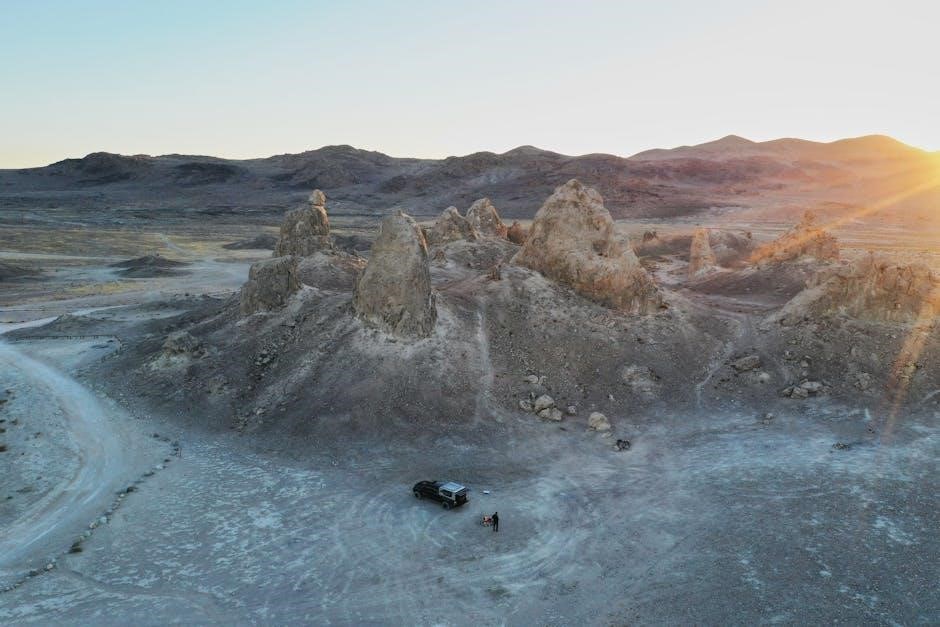
Geologic Mapping & Research
Geologic maps, often in PDF format, detail the Central Grapevine Mountains’ structures—thrust faults, folds—and are crucial for ongoing research in Inyo County․
Central Grapevine Mountains Geologic Map
Detailed geologic mapping of the Central Grapevine Mountains, spanning Inyo County, California, and extending into Esmeralda and Nye Counties, Nevada, provides a foundational resource for understanding the region’s complex geological history․ These maps, frequently available as PDF documents, illustrate the distribution of various rock units, highlighting the intricate interplay of Permian, Triassic, Oligocene, Miocene, and Eocene formations․
The mapping process meticulously documents geological structures, including prominent thrust faults, folds, and other deformational features that have shaped the landscape over millions of years․ Researchers, such as C․ Stevens and P․ Stone, utilize these maps in conjunction with field observations and laboratory analyses to unravel the chronological sequence of events․ The maps are essential for contextualizing paleontological discoveries, like those found within the Titus Canyon Formation, and for interpreting the region’s tectonic evolution․ Accessing these PDF resources is vital for continued research and a comprehensive understanding of the area’s geological past․
Geological Structures: Faults, Folds & Thrusts
The Grapevine Mountains exhibit a complex array of geological structures, prominently featuring thrust faults, folds, and other deformational features meticulously documented in available PDF geologic maps․ These structures reflect a long history of tectonic activity, shaping the landscape of Inyo County, California, and adjacent regions․ Mapping efforts reveal evidence of multistage deformation, indicating repeated episodes of compression and extension․
Thrust faults demonstrate significant crustal shortening, while folds reveal the ductile response of rock layers to stress․ The interplay between these structures is crucial for understanding the region’s geological evolution․ Research, including studies near Tinemaha Reservoir, utilizes these structural features to constrain chronological models and link Permian-Triassic events․ Detailed analysis, often presented in PDF reports, is essential for interpreting the complex geological history of the Grapevine Mountains․
Tinemaha Reservoir & Chronological Constraints
Geological relationships exposed near Tinemaha Reservoir, southeast of Big Pine in east-central California, provide critical chronological and structural constraints for understanding the Grapevine Mountains’ history․ These exposures, detailed in accessible PDF geologic maps, allow researchers to link Permian and Triassic events with later deformation phases․ The reservoir area serves as a key locality for establishing a regional stratigraphic framework․
Precise dating of rock units, often utilizing tuffaceous layers, helps refine the timing of geological events․ Studies referenced in PDF reports highlight a multistage history, including pre-Basin and Range deformation․ This research, often available through Semantic Scholar, builds a robust timeline for the region’s geological evolution within Inyo County, offering valuable insights into the formation of the Grapevine Mountains․
Accessibility & Exposure Challenges
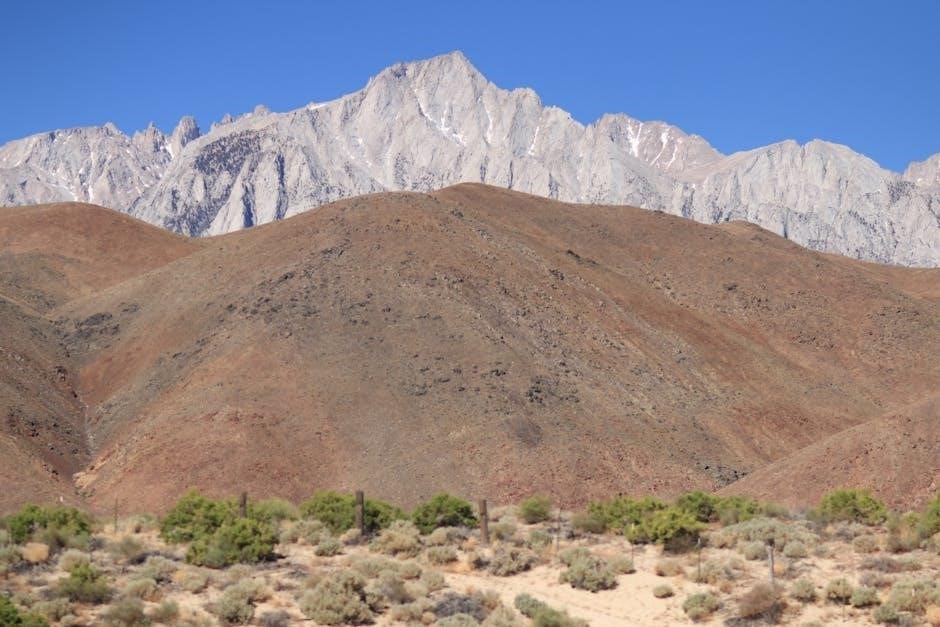
The Grapevine Mountains, despite offering excellent geological exposures due to their rugged terrain and barren landscapes, present significant accessibility challenges for researchers․ Detailed PDF geologic maps often note the difficulties in reaching key localities within Inyo County, hindering comprehensive field studies․ This remoteness impacts the thoroughness of geological surveys and mapping efforts․
However, the very lack of vegetation contributes to exceptional rock exposures, allowing for detailed observation of complex geological structures․ While challenging, these conditions are ideal for unraveling the region’s history, as documented in reports from the California Division of Mines and Geology․ Accessing information via PDF resources and platforms like Semantic Scholar helps overcome some logistical hurdles, providing valuable data despite physical limitations․
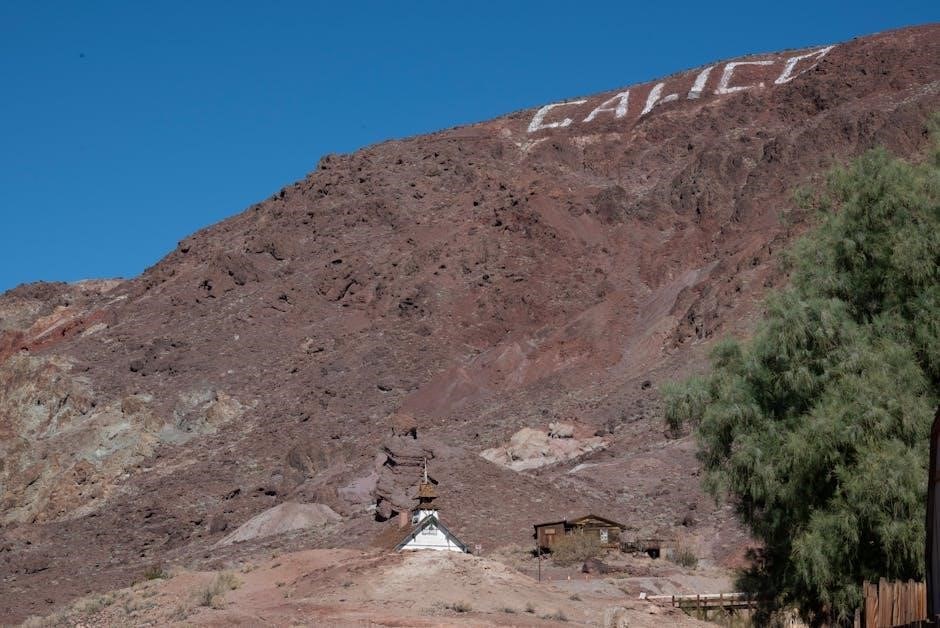
Paleontological Significance
PDF analyses of the Titus Canyon Fauna, within Inyo County’s Grapevine Mountains, reveal Duchesnean age fossils and stratigraphic details from dated tuffaceous units․
The Titus Canyon Fauna
The Titus Canyon Fauna, discovered within the Titus Canyon Formation of the Grapevine Mountains in Inyo County, California, represents a crucial window into the Late Middle Eocene epoch․ PDF resources detailing paleontological surveys highlight the significance of this fauna, showcasing a diverse assemblage of fossilized mammals․ Research, as documented in available literature, focuses on stratigraphic columnar sections correlating fossil locality levels with dated tuffaceous units – providing precise chronological control․
This fauna is particularly important for understanding the Duchesnean age and the paleoenvironmental conditions prevalent during that period․ Detailed analyses, often presented in accessible PDF formats, reveal insights into the evolutionary relationships of these ancient mammals․ The preservation quality within the Titus Canyon Formation allows for detailed morphological studies, contributing significantly to our understanding of mammalian evolution in western North America․ Further research continues to refine our knowledge of this remarkable paleontological treasure․
Fossil Locality Levels & Dated Tuffaceous Units
Precise dating of the Titus Canyon Formation, within the Grapevine Mountains of Inyo County, relies heavily on correlating fossil locality levels with dated tuffaceous units․ PDF reports and geological maps illustrate these stratigraphic relationships, crucial for establishing a robust chronological framework․ Studies, like those by Stock and Bode (referenced in available PDFs), meticulously document the positions of fossil discoveries within the volcanic layers․
These volcanic ash deposits provide radiometric ages, anchoring the Titus Canyon Fauna to the Late Middle Eocene․ The integration of paleontological data with geochronological constraints, readily accessible in research PDFs, allows scientists to refine the understanding of mammalian evolution during the Duchesnean age․ Detailed columnar sections, often included in these resources, visually represent the stratigraphic context of these important fossil finds, aiding in comparative analyses․
Duchesnean Age & Middle Eocene Period
The Grapevine Mountains’ Titus Canyon Formation yields fossils indicative of the Duchesnean age, a key interval within the Middle Eocene Period․ PDF resources detail how the Titus Canyon Fauna provides crucial insights into North American mammalian evolution during this time․ Research, accessible through Semantic Scholar and California geological surveys, focuses on establishing the precise age of these deposits․
The Middle Eocene climate, as inferred from the paleontology and sedimentology documented in available PDFs, was significantly warmer than present-day conditions․ Understanding the Duchesnean stage within this broader context is vital for reconstructing ancient ecosystems․ Geological mapping of Inyo County reveals the stratigraphic position of these fossil-bearing layers, allowing for regional correlations and a refined understanding of the paleogeography․
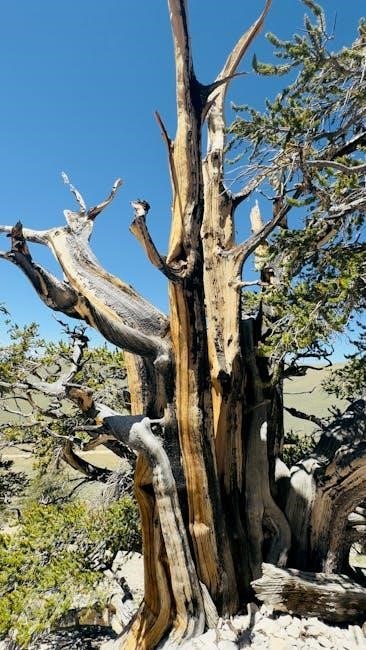
Death Valley & Regional Geology
Grapevine Mountains define Death Valley’s eastern wall, bounded by Boundary and Grapevine Canyons; PDF maps illustrate their relationship to the Funeral Mountains․
Grapevine Mountains as Part of Death Valley
The Grapevine Mountains are intrinsically linked to the geological narrative of Death Valley, forming a significant portion of its eastern boundary․ Specifically, these mountains establish the northern limits of the valley, delineated by Grapevine Canyon, while Boundary Canyon marks their southern extent․ This geographical positioning is clearly illustrated in detailed geologic maps, often available as PDF resources, produced by the California Division of Mines and Geology, particularly Special Report 106․
These reports and maps emphasize the rugged terrain and challenging accessibility of the Grapevine Mountains, yet highlight the exceptional exposures they offer for studying complex geological structures․ The mountains’ high relief and barren landscapes provide a natural window into the region’s history, revealing intricate fault systems, folds, and thrusts․ Research by C․ Stevens and P․ Stone, accessible through Semantic Scholar, further elucidates the chronological and structural constraints revealed near Tinemaha Reservoir, aiding in understanding the Permian and Triassic relationships․
Boundary Canyon & Grapevine Canyon as Defining Limits
Grapevine Canyon and Boundary Canyon serve as crucial geographical markers, precisely defining the extent of the Grapevine Mountains within the broader Death Valley landscape․ California Division of Mines and Geology’s Special Report 106 explicitly states the mountains are “limited on the south by Boundary Canyon and on the north by Grapevine Canyon,” forming the eastern wall of northern Death Valley․ Detailed PDF geologic maps, covering Inyo County and extending into Nevada, visually represent these boundaries․
These canyons aren’t merely geographical limits; they represent areas of significant geological exposure․ The rugged terrain within and surrounding these canyons provides excellent opportunities for studying the complex geological structures present in the Grapevine Mountains․ Research, documented on platforms like Semantic Scholar, utilizes these exposures to analyze faulting, folding, and the chronological relationships of various rock formations, contributing to a comprehensive understanding of the region’s history․
Relationship to Funeral Mountains
The Grapevine Mountains exhibit a close geological relationship with the adjacent Funeral Mountains, both situated within Inyo County, California, and extending into Nevada․ Research indicates a shared geological history, particularly concerning sedimentary records․ A multistage history is recorded in latest Oligocene and early Miocene sedimentary rocks at the southern end of the Funeral Mountains, providing context for understanding formations in the Grapevine range․
Stratigraphic columnar sections, detailed in PDF documentation like Stock and Bode’s work (modified by recent studies), show fossil locality levels and dated tuffaceous units across both the Grapevine and northwestern Funeral Mountains․ This comparative analysis, accessible through resources like Semantic Scholar, reveals interconnected geological events and helps reconstruct the regional tectonic evolution․ Understanding this relationship is crucial for interpreting the complete geological narrative of the Death Valley region․
California Division of Mines & Geology Reports
Special Report 106 details Death Valley’s geologic features, specifically the Grapevine Mountains, bounded by Boundary and Grapevine Canyons, as documented in PDFs․
Special Report 106: Geologic Features of Death Valley
California’s Division of Mines and Geology’s Special Report 106 provides a comprehensive overview of the geologic features within Death Valley, with significant focus on the Grapevine Mountains․ This report, often accessible as a PDF document, details the mountains’ rugged terrain and excellent exposures of complex geological structures․ The Grapevine Mountains are specifically defined as forming the eastern wall of northern Death Valley, geographically limited to the south by Boundary Canyon and to the north by Grapevine Canyon․
The report highlights the challenges posed by the mountains’ poor accessibility, yet emphasizes the value of their high relief in revealing intricate geological formations․ Investigations detailed within the report contribute to understanding the region’s history, including the interplay of faulting, folding, and thrusting that shaped the landscape․ Researchers utilize these findings, alongside detailed geologic maps of areas like Inyo County, to reconstruct the area’s evolutionary timeline․ The report serves as a foundational resource for ongoing geological studies and paleontological investigations within Death Valley and the surrounding areas․
Historical Geological Surveys & Documentation
Early geological documentation of the Grapevine Mountains, within Inyo County, California, began with foundational surveys that laid the groundwork for modern understanding․ These historical efforts, often culminating in detailed reports and maps – frequently available as PDFs – meticulously cataloged the region’s complex stratigraphy and structural geology․ Investigations by entities like the California Division of Mines and Geology, particularly through Special Report 106, provided crucial initial assessments of the area’s geological features․
Subsequent research built upon these early surveys, refining interpretations of the mountains’ formation and evolutionary history․ These historical documents are invaluable resources for tracing the development of geological thought regarding the region, offering insights into past methodologies and evolving scientific perspectives․ Accessing these archived surveys, often in PDF format, allows researchers to contextualize current findings and appreciate the cumulative nature of geological knowledge concerning the Grapevine Mountains․
Available PDF Resources & Semantic Scholar Data
PDF geologic maps detail the Grapevine Mountains, while Semantic Scholar provides research insights from C․ Stevens and P․ Stone regarding its history․
Geologic Map PDFs: Accessing Detailed Information
Geologic map PDFs are crucial for understanding the Grapevine Mountains’ complex structure, spanning Inyo County, California, and extending into Esmeralda and Nye Counties, Nevada․ These detailed maps, readily available online, illustrate the distribution of various rock formations, highlighting significant geological structures like thrust faults, folds, and other tectonic features․
Researchers like C․ Stevens and P․ Stone have utilized these maps to analyze the mountain’s geological relationships, particularly near Tinemaha Reservoir․ Accessing these PDF resources allows for a visual representation of the area’s stratigraphy, aiding in the reconstruction of its geological history․ The maps showcase the interplay between Permian and Triassic formations, as well as the Oligocene and Miocene sedimentary records, providing a comprehensive overview for geologists and researchers․
Semantic Scholar Insights: Research & Analysis
Semantic Scholar provides valuable insights into research concerning the Grapevine Mountains, Inyo County, California, and surrounding areas․ Studies by researchers such as C․ Stevens and P․ Stone, accessible through the platform, focus on geologic relationships exposed near Tinemaha Reservoir, offering key chronological and structural constraints․
Analysis reveals a multistage, pre-Basin and Range history recorded in Oligocene and Miocene sedimentary rocks within the Funeral Mountains․ Furthermore, research details the Duchesnean age Titus Canyon Fauna and stratigraphic columnar sections of the Grapevine and Funeral Mountains․ Semantic Scholar facilitates access to PDF documents and related publications, enabling a deeper understanding of the region’s complex geological past and paleontological significance․
Research by C․ Stevens & P․ Stone
The collaborative research of C․ Stevens and P․ Stone significantly contributes to understanding the geological history of the Grapevine Mountains in Inyo County, California․ Their work, often documented in accessible PDF formats via platforms like Semantic Scholar, centers on the critical exposures near Tinemaha Reservoir․
This location provides essential chronological and structural data, linking Permian and Triassic formations․ Their investigations reveal complex geological relationships, aiding in reconstructing the region’s tectonic evolution․ The research highlights the importance of mountain-alluvial fan systems as analogues for larger-scale geological processes․ Detailed mapping and analysis contribute to a refined understanding of the area’s structural framework and sedimentary record, furthering knowledge of this unique California landscape․
Future Research & Ongoing Studies
Continued investigation of the Grapevine Mountains in Inyo County, California, promises to refine our understanding of its complex geological history, with detailed PDF geologic maps being crucial․ Future studies will likely focus on expanding the stratigraphic framework, particularly within the Titus Canyon Formation, and further dating of tuffaceous units to constrain the Duchesnean age fauna․
Research will also address accessibility challenges to improve exposure analysis․ Integrating data from Semantic Scholar and reports from the California Division of Mines & Geology will be vital․ Ongoing work aims to clarify the interplay between faulting, folding, and thrusting, ultimately building a more comprehensive model of the region’s tectonic evolution and paleontological significance․