Crosley Turntable Instruction Manual: A Comprehensive Guide
Welcome! This guide, sourced from resources like Manualzilla and the Internet Archive (dated 03/31/2026), provides detailed instructions for your Crosley turntable, ensuring optimal performance and enjoyment.
Understanding Your Crosley Turntable
Congratulations on choosing a Crosley turntable! These devices blend classic vinyl playback with modern features like Bluetooth connectivity and USB encoding, as highlighted in available manuals. Understanding its core components and functions is key to a fulfilling listening experience.
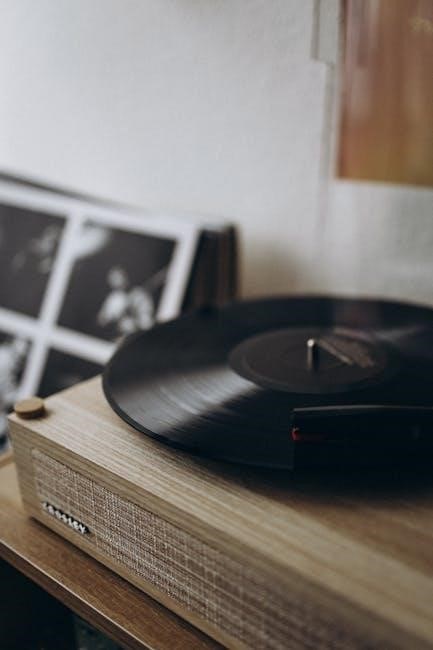
Crosley turntables cater to a wide range of users, from beginners to seasoned audiophiles. This manual, drawing from resources like Manualzilla, aims to demystify the setup and operation. Whether you’re rediscovering your record collection or starting a new one, this guide will help you navigate the world of vinyl. Remember, the Internet Archive offers a wealth of supplemental information.
Unboxing and Initial Setup
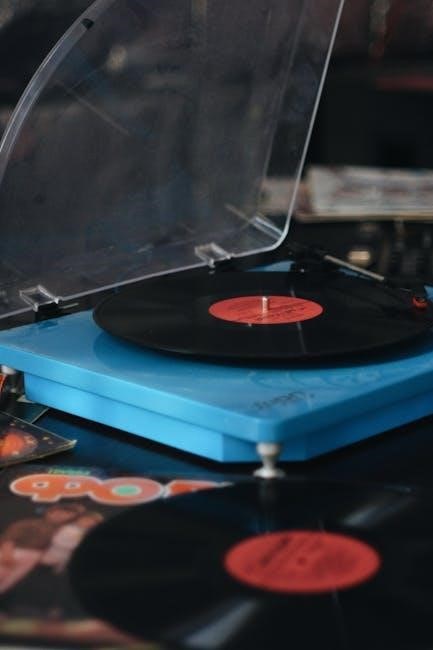
Carefully unpack your Crosley turntable, referencing the included parts list to ensure all components are present. Gently remove any protective packaging. Before connecting to power, inspect the turntable for any shipping damage. Place the turntable on a stable, level surface, away from direct sunlight and excessive vibration.
Initial setup involves attaching the platter and, if detachable, the tonearm. Consult the manual (found on resources like Manualzilla) for specific instructions related to your model. Avoid forcing any parts; gentle pressure is sufficient. Proper placement is crucial for optimal sound quality and longevity, as noted in available online collections.
Component Identification
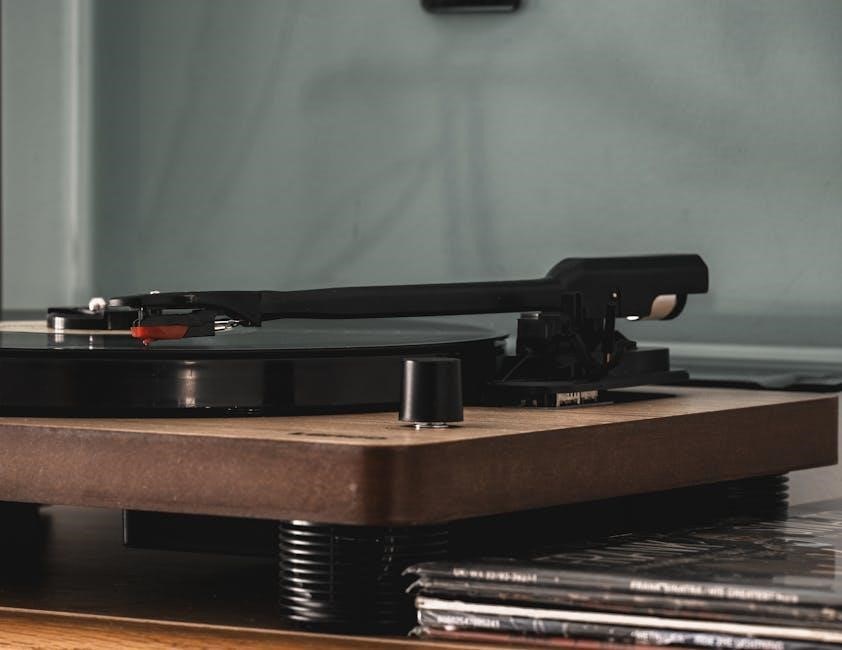
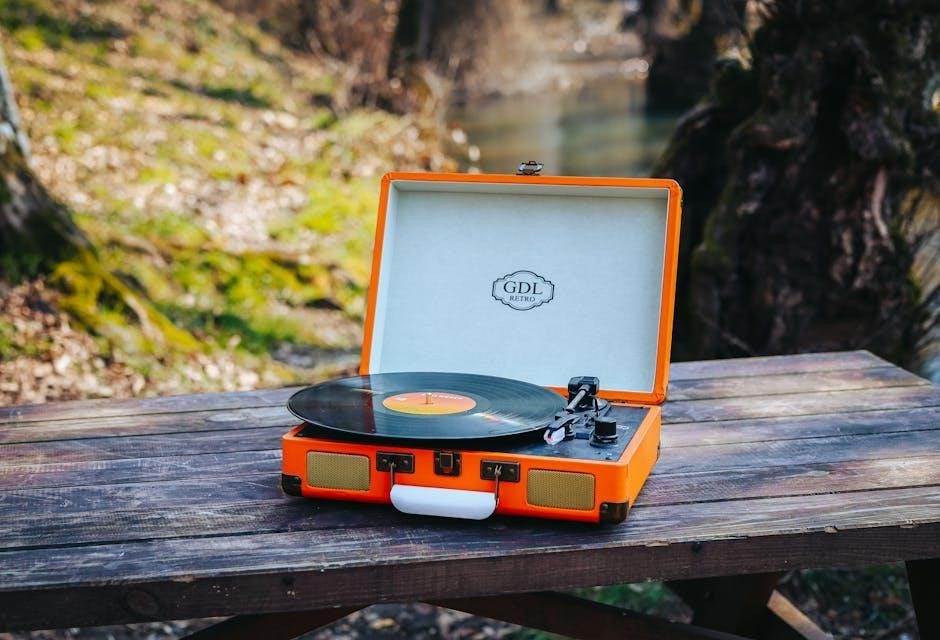
Familiarize yourself with the key components of your Crosley turntable. This includes the Turntable Base, providing a stable foundation, and the Platter, where records are placed. The Tonearm, crucial for accurate tracking, holds the Cartridge and Stylus (needle).
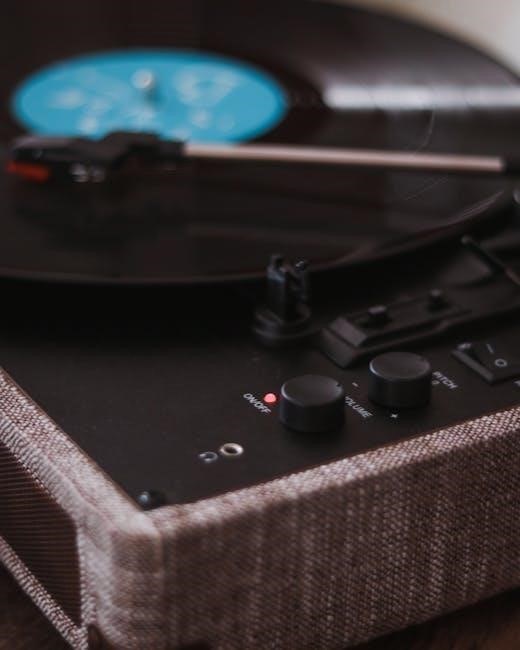
Locate the Control Knobs & Buttons – typically for power, speed selection (33 ⅓, 45, and 78 RPM), and auto/manual functions. Refer to online manuals (like those archived on the Internet Archive) for specific labeling. Understanding each component’s function, as detailed in available collections, is vital for proper operation and maintenance.
Turntable Base & Platter
The turntable base provides a stable, level surface for all other components, minimizing vibrations that can affect sound quality. Ensure it’s placed on a solid, even surface. The platter, typically made of metal or plastic, is the rotating disc where your vinyl records sit.
Carefully place records onto the platter, ensuring they are centered. Some models feature a felt mat to reduce static and protect your vinyl. Proper alignment and a clean platter surface, as highlighted in online manuals and collections, are essential for optimal playback and record preservation.
Tonearm and Cartridge
The tonearm is the pivoting arm that holds the cartridge and allows it to trace the grooves of the record. Handle it with extreme care to avoid damage. The cartridge houses the stylus (needle) which converts the physical vibrations of the record grooves into electrical signals.
Online resources emphasize the stylus’s fragility. Proper alignment and tracking force (if adjustable on your model) are crucial for accurate sound reproduction and preventing record wear. Regularly inspect the stylus for wear and replace it as needed, following instructions found in available manuals.
Control Knobs & Buttons
Control knobs and buttons vary depending on your Crosley turntable model, but common features include a power switch, speed selector (33 ⅓, 45, and sometimes 78 RPM), and volume control. Some models feature an auto-stop button, halting playback at the record’s end.
Refer to your specific model’s manual (available through resources like Manualzilla) for detailed explanations of each control. Understanding these functions is key to operating your turntable effectively. Bluetooth pairing buttons and USB encoding controls may also be present on certain units.
Connecting Your Turntable
Connecting your Crosley turntable allows you to enjoy your vinyl collection through external speakers or audio systems. Options include connecting to powered speakers via RCA cables, or utilizing a receiver/amplifier for a more robust sound experience.
Many Crosley models also offer Bluetooth pairing, enabling wireless connection to compatible speakers and headphones. Ensure proper cable connections and follow the Bluetooth pairing instructions (detailed later in this manual) for optimal audio output. Resources like Manualzilla can provide model-specific connection diagrams.
Connecting to Speakers (Powered/Passive)
For powered speakers, simply connect RCA cables from the turntable’s RCA output jacks to the corresponding input jacks on your speakers; Ensure a secure connection for optimal sound quality. If using passive speakers, you’ll require a separate amplifier or receiver. Connect the turntable’s RCA outputs to the amplifier’s phono input.
Then, connect the passive speakers to the amplifier’s speaker outputs. Remember to adjust the volume on both the turntable and the amplifier to achieve your desired listening level. Consult resources like Manualzilla for specific wiring configurations;
Connecting to a Receiver/Amplifier
To connect your Crosley turntable to a receiver or amplifier, utilize standard RCA cables. Connect the red and white RCA plugs from the turntable’s output to the corresponding input jacks on your receiver – typically labeled “Phono.” Important: If your receiver lacks a dedicated phono input, you’ll need a separate phono preamplifier to boost the signal.
Ensure the receiver is set to the correct input source. Adjust volume levels carefully to prevent damage to your speakers. Refer to Manualzilla or your receiver’s manual for detailed connection diagrams and optimal settings.
Bluetooth Pairing Instructions
To pair your Crosley turntable via Bluetooth, first, ensure it’s in pairing mode. This usually involves pressing and holding the Bluetooth button until an indicator light flashes. On your smartphone, tablet, or other Bluetooth-enabled device, navigate to the Bluetooth settings and scan for available devices.
Select your Crosley turntable from the list. If prompted, enter the pairing code “0000”. Once connected, the indicator light will typically become solid. Refer to Manualzilla for model-specific instructions, as pairing procedures can vary. Enjoy wireless audio streaming!
Playing Records
Before playing your cherished vinyl, proper setup is crucial. Ensure the turntable is placed on a level surface, minimizing vibrations for optimal sound quality. Gently place a record onto the platter, aligning it with the spindle. Carefully lift the tonearm using the cueing lever and position the stylus just above the record’s edge.
Slowly lower the tonearm with the cueing lever, allowing the needle to gently drop into the groove. For models with adjustable tracking force and anti-skate, consult your specific manual for correct settings. Enjoy the warm, authentic sound of your records!
Placing and Leveling the Turntable
Optimal performance demands a stable foundation. Choose a solid, level surface away from vibrations – speakers are a common source! Use a bubble level to verify the turntable’s horizontal alignment. Adjust the feet, if equipped, until the bubble centers.
An unleveled turntable can cause skipping, distorted sound, and premature wear to your records and stylus. Prioritize a stable, vibration-free location. Even slight inclines can negatively impact playback. Take the time to ensure proper leveling for the best possible listening experience and longevity of your vinyl collection.
Cueing and Dropping the Needle
Precise needle placement is crucial for sound quality and record preservation. Utilize the cueing lever to gently raise and lower the tonearm. First, rotate the platter to position the desired track under the tonearm. Then, use the cueing lever to lift the tonearm;
Carefully move the tonearm over the record’s lead-in groove. Slowly lower the needle using the cueing lever – avoid dropping it! This minimizes wear and prevents potential damage. Proper cueing ensures a clean start and prevents unwanted pops or scratches during playback.
Adjusting Tracking Force & Anti-Skate (if applicable)
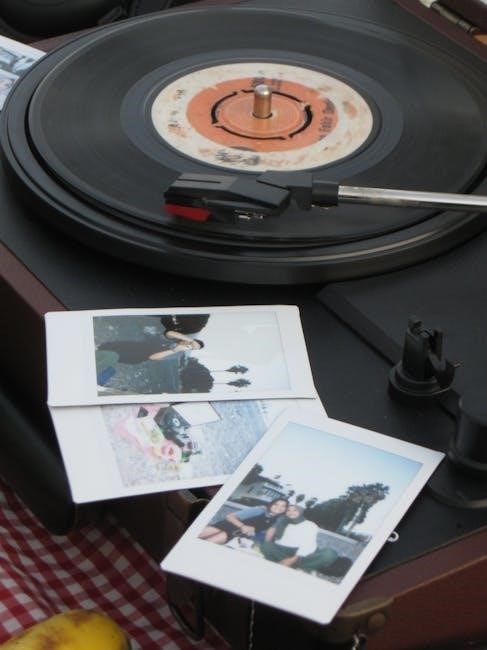
Not all Crosley turntables feature adjustable tracking force and anti-skate. If your model includes these controls, precise adjustment is vital for optimal performance and record longevity. Tracking force, measured in grams, determines the downward pressure of the stylus. Consult your turntable’s specifications for the recommended range.
Anti-skate compensates for the inward pull on the tonearm during playback. Adjust it to match the tracking force. Incorrect settings can cause distortion or uneven wear on your records. Fine-tune these settings carefully for the best possible audio experience.
Turntable Features & Functions
Crosley turntables often boast versatile features beyond basic record playback. Many models incorporate a built-in Bluetooth transmitter/receiver, enabling wireless connection to speakers or streaming from mobile devices. USB encoding allows you to digitize your vinyl collection, creating digital files from your favorite records.
Furthermore, Crosley turntables frequently offer automatic and manual operation modes. Automatic modes simplify playback, while manual operation provides greater control for audiophiles. Explore these functions to tailor your listening experience and fully utilize your turntable’s capabilities.
Built-in Bluetooth Transmitter/Receiver
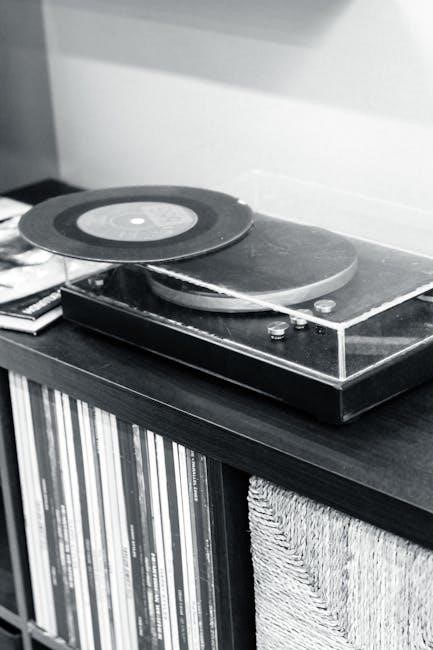
Your Crosley turntable’s Bluetooth functionality offers convenient wireless connectivity. As a transmitter, it sends audio to Bluetooth headphones or speakers, eliminating cable clutter. Conversely, as a receiver, it allows streaming music from your smartphone or tablet directly to the turntable – and then to your connected speakers!
To pair, activate Bluetooth on your device and select your Crosley turntable from the available list. A successful connection is usually indicated by a flashing light. Enjoy the freedom of wireless audio with this versatile feature!
USB Encoding to Digital Files
Preserve your vinyl collection by converting records to digital formats using the turntable’s USB encoding feature. Connect your turntable to a computer via USB, and utilize compatible recording software (often included or available for free download). This process captures the audio from your records, creating digital files like MP3 or WAV.
Ensure proper software settings for optimal recording quality. This allows you to enjoy your favorite albums on any device, while safeguarding your original vinyl from wear and tear. It’s a fantastic way to bridge analog and digital worlds!
Automatic/Manual Operation Modes
Crosley turntables offer versatility with both automatic and manual operation modes, catering to different listening preferences. Automatic modes simplify playback – the turntable automatically starts and stops, and may even return the tonearm at the record’s end. Manual operation grants full control, allowing you to cue tracks, adjust playback speed, and manage the entire listening experience.
Refer to your specific model’s instructions to switch between modes. Understanding these options enhances your enjoyment and allows for a tailored vinyl experience, blending convenience with audiophile control.
Troubleshooting Common Issues
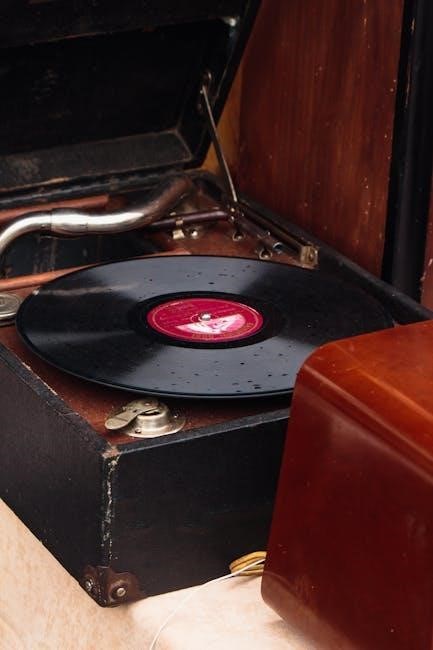
Encountering problems? This section addresses frequent issues with your Crosley turntable. No sound output often stems from incorrect connections or volume settings – verify speaker wiring and amplifier input. Skipping or repeating records can indicate a dirty stylus, improper tracking force, or a warped record; clean the stylus and ensure proper setup.
Bluetooth connection problems may require re-pairing or checking device compatibility. Consult the manual for specific error codes and solutions. Remember, resources like Manualzilla can offer additional support for resolving these common playback challenges.
No Sound Output
Silence when you expect music? Begin by verifying the obvious: is the turntable powered on? Check the volume knob on both the turntable and connected speakers or receiver. Ensure the correct input is selected on your amplifier. Inspect speaker cables for secure connections – loose wires are a common culprit.
If using Bluetooth, confirm pairing and volume levels on both devices. A faulty stylus or cartridge can also cause silence; consider testing with a known working component. Resources like Manualzilla may offer model-specific troubleshooting steps.
Skipping or Repeating Records
Is your record stuck in a loop or jumping tracks? First, ensure the turntable is placed on a perfectly level surface. Vibrations can cause skipping; try a different location. A dirty record is a frequent offender – clean it thoroughly with a record brush and cleaning solution.
Check the tracking force and anti-skate settings (if adjustable on your model). An improperly balanced tonearm can lead to skipping. A worn stylus will also cause issues; replacement is often necessary. Consult resources like Manualzilla for specific guidance related to your Crosley model.
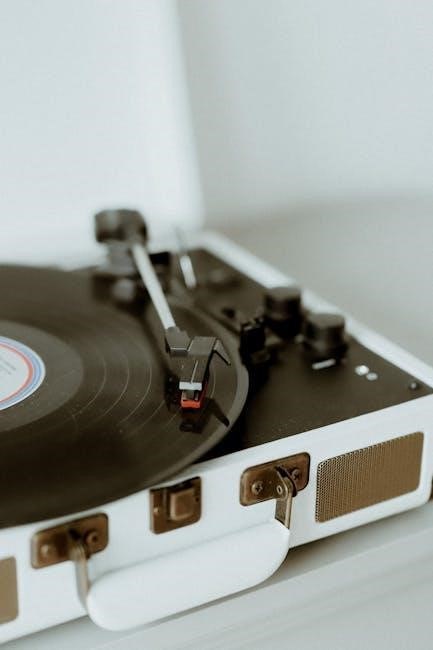
Bluetooth Connection Problems
Experiencing difficulty pairing your Crosley turntable via Bluetooth? Ensure Bluetooth is enabled on both your turntable and the receiving device (speaker, headphones, etc.). Verify the turntable is in pairing mode – consult your model’s specific instructions. Move the devices closer together, minimizing potential interference from other wireless signals.
Clear any previously paired devices from your receiving device’s Bluetooth list. A “forget” or “unpair” option is usually available. Restarting both the turntable and the receiving device can often resolve connection issues. Refer to online resources, such as Manualzilla, for model-specific troubleshooting.
Maintenance and Care
Preserving your Crosley turntable’s performance requires regular maintenance. Gently clean the turntable and records with a soft, dry cloth to remove dust and debris. Avoid using harsh chemicals or abrasive cleaners. The stylus (needle) is a crucial component; replace it periodically – typically after 1000 hours of use – to prevent record damage and maintain sound quality.
Inspect the belt drive (if applicable) for wear and tear, replacing it when necessary. Proper storage is also vital; keep the turntable covered when not in use to protect it from dust. Resources like Manualzilla can offer model-specific care tips.
Cleaning the Turntable & Records
Maintaining cleanliness is key to optimal performance. For the turntable itself, use a soft, lint-free cloth to gently wipe down the base and platter. Avoid liquids directly on the surface. Records should be cleaned regularly with a specialized record brush, removing dust before each play. A carbon fiber brush is ideal for static removal.
For deeper cleaning, consider a record cleaning solution and microfiber cloth, always following the solution’s instructions. Never use household cleaners on your records! Proper cleaning extends record life and improves sound quality, as highlighted in resources like Manualzilla.
Replacing the Stylus/Needle
The stylus, or needle, is a consumable part requiring periodic replacement. A worn stylus damages records and degrades sound quality. Consult your turntable’s model-specific manual for the correct stylus type. Gently remove the old stylus using tweezers or a stylus removal tool – avoid excessive force.
Align the new stylus carefully with the cartridge and secure it. Improper installation can cause damage. Resources like those found on the Internet Archive emphasize regular inspection. Replacement frequency depends on usage, but generally, every 1000 hours is recommended.
Crosley Turntable Model Variations & Manual Access
Crosley offers a diverse range of turntable models, each with unique features and specifications. Variations include Cruiser, Discovery, and Executive models, differing in connectivity (Bluetooth, USB) and operation (automatic, manual). Identifying your specific model is crucial for accessing the correct manual.
Resources like Manualzilla and the Internet Archive (contributions section) provide access to numerous Crosley turntable manuals. Search by model number for accurate instructions. If your original manual is lost, these online archives are invaluable. Always refer to the manual specific to your turntable model for optimal setup and troubleshooting.